Glyphosate remains authorized in France for certain categories of users, but under strict conditions that have significantly evolved since 2019. Understanding who can still buy, store, and spray this active substance requires distinguishing three levels of regulation: European, national, and individual.
Certiphyto and professional status: the two prerequisites
Before discussing types of crops or application areas, French regulation sets an access filter. Only holders of a Certiphyto can handle glyphosate. This individual certificate for plant protection products applies to any individual who uses, sells, or advises on these products in a professional context.
See also : All the steps to easily access civil status online in 2024
Since January 1, 2019, individuals are no longer allowed to buy, possess, or apply glyphosate. This ban covers private gardens, vegetable gardens, and residential green spaces. Garden centers can no longer offer these products for self-service.
The regulatory framework governing the use of glyphosate in France is not limited to the agricultural world. Non-farming professionals, landscapers, weeding companies, and service providers working on industrial sites or railway properties retain the right to use it, provided they justify their Certiphyto and have documented professional frameworks.
See also : What is the language spoken in Jamaica? Origins and unique features to discover

Authorized agricultural uses: which crops, what restrictions
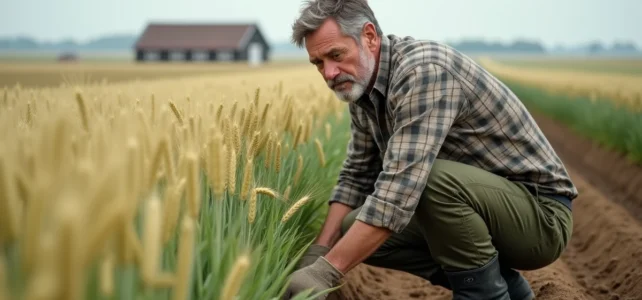
Farmers represent the vast majority of glyphosate users in France. The substance remains approved for weed management in major crops, viticulture, and arboriculture. Its effectiveness over a wide range of plants and low cost explain its persistence.
However, national regulations have restricted application conditions. Pre-harvest use (desiccation) is prohibited for crops intended for human or animal consumption. This practice, which involved accelerating the drying of grains before harvest, was eliminated in France even before the European renewal in 2023.
The maximum authorized doses and the number of annual applications depend on each commercial product. Anses issues marketing authorizations (AMM) at the national level and can withdraw or suspend an AMM if new risk data emerges. In 2024, the administrative court of Lyon annulled the authorization of two glyphosate-based herbicides, stating that the risk assessment was insufficient.
Non-treatment zones and local constraints
Non-treatment zones (ZNT) apply near watercourses, homes, and public establishments. These distances vary depending on the product and type of crop, but they effectively reduce the area where a farmer can spray.
Some local authorities and departments impose additional commitment charters, with distances exceeding the regulatory minimums. The right to use glyphosate therefore also varies according to the location of the plot.
Non-agricultural areas: professionals outside of farming
The most frequent confusion concerns non-agricultural uses. Local authorities can no longer use synthetic plant protection products for the maintenance of green spaces, roads, and public walkways since 2017 (Labbé law). Glyphosate is therefore excluded from standard municipal maintenance.
However, several categories of professionals retain legal access:
- Railway infrastructure managers, who treat the railway areas for safety reasons, under a regulated protocol
- Landscaping companies working on private sites not open to the public (industrial zones, logistics platforms)
- Approved service providers for weeding specific areas such as airfields or certain military sites
These non-agricultural uses remain subject to the Certiphyto and a valid AMM for the product used. The absence of either exposes one to criminal penalties.
European renewal and French timeline
The European Commission renewed glyphosate’s approval for ten years in November 2023, after member states failed to reach a qualified majority. France abstained during the vote, a position criticized by environmental associations that recalled the presidential promise of prohibition made in 2017.
This European renewal does not mean a blank check at the national level. Each commercial product must obtain an AMM issued by Anses, which evaluates the specific risks associated with the complete formulation (active substance plus co-formulants). Anses has initiated a comparative re-evaluation of non-chemical alternatives to glyphosate, the conclusions of which will influence future AMMs.
Withdrawn products and maintained products
Not all glyphosate-based products have the same status. Some have had their authorization annulled by administrative justice, while others are under re-evaluation. The number of plant protection products containing glyphosate that are actually marketable in France fluctuates from year to year, depending on Anses’ decisions and legal challenges.
Glyphosate sales in France remain significant, driven by the lack of a chemical alternative offering the same effectiveness at a comparable cost across all weeds. Mechanical weeding, biocontrol solutions, and agronomic levers (crop rotations, cover crops) are progressing, but their full adoption would require investments and changes in practices that not all farms can absorb at the same pace.
The legal framework for glyphosate in France thus overlaps three filters: the European approval of the substance, the national AMM of each commercial product, and the individual status of the user (certified professional or not). As long as one of these three levels is lacking, use is illegal, regardless of the size of the plot or the nature of the activity.