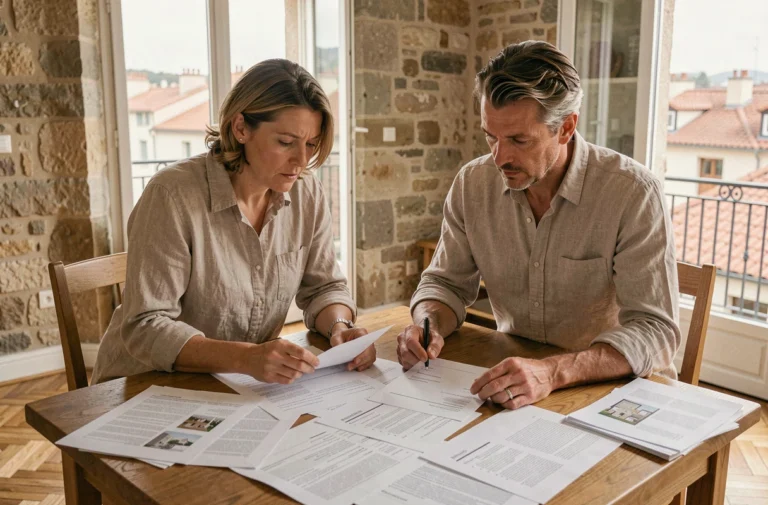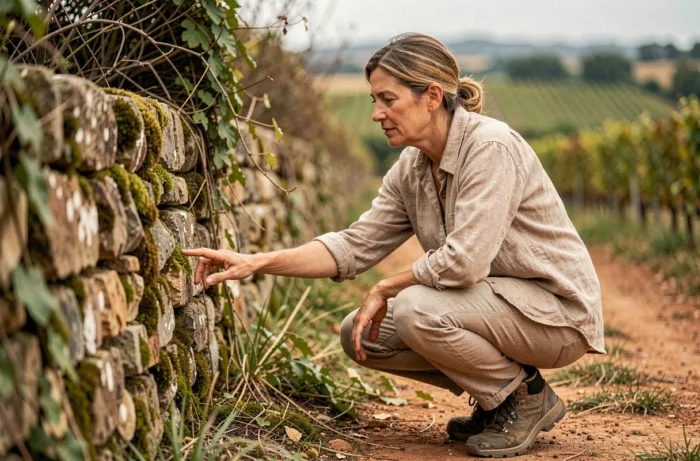
The slow travel calibrates the traveler’s time to that of the place being traversed. Spending three weeks within a thirty-kilometer radius changes the perception of a territory. One identifies paths that tourist maps ignore, learns to greet the baker by her first name, and eventually recognizes the song of the oriole in the hedge behind the cottage. This calibration produces concrete, measurable effects on the body as well as on the carbon footprint of the stay.
Night train in Europe: what the ground really reveals
The European network of night trains is gradually being rebuilt, but it does not yet form a coherent mesh that allows for connecting any capital without a transfer. Thus, slow train travel is constructed route by route, not all at once.
The new Nightjet trains, for example, introduce mini-lockable individual cabins. This detail matters: intimacy and comfort condition the adoption of slow travel by travelers who are not seasoned backpackers. Sleeping in a compartment shared with five strangers and sleeping in a private cabin are two radically different experiences.
According to a study published in the journal Sustainability in 2026, environmental motivation dominates the reasons for choosing the night train, cited by more than eight out of ten respondents. Avoiding daytime travel and seeking a stress-free journey come next.
Slow train travel thus involves both the quality of time spent and the reduction of carbon footprint. One does not board a Nightjet solely out of ecological awareness: one also boards because one wants to arrive rested, without having lost a morning in an airport.
Routes like those crossing Normandy offer a good entry point to test this small-scale rail rhythm, and the site Normandy Unpacked lists regional routes designed for this type of slow stay.
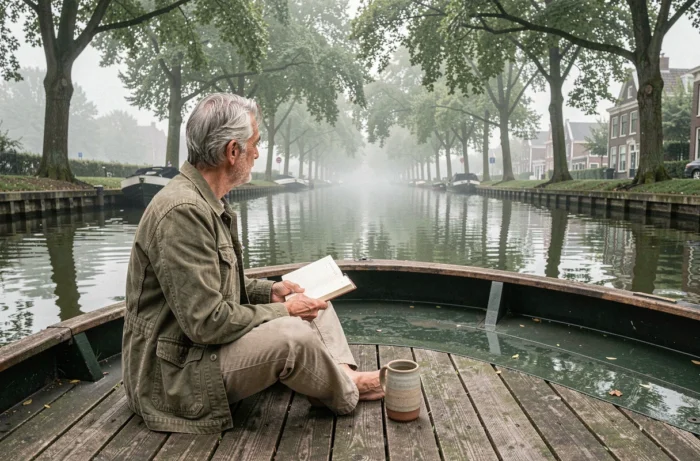
Extended stays and shoulder seasons: the underestimated lever of slow tourism
Extending the duration of the stay in one place has a collateral effect that few travelers anticipate: one naturally finds oneself in the shoulder season.
Staying three weeks somewhere in October or March costs less than a week in August. Accommodations offer reduced rates, tourist sites are accessible without waiting in line, and locals have more availability to interact. Recent developments in rail services in the Alps, for example, encourage autumn and winter stays where attendance used to concentrate in summer.
This shift in attendance towards off-peak seasons produces a double benefit. For the traveler, the experience gains authenticity. For the destination, the pressure on infrastructure, water, and local ecosystems decreases during the summer peaks.
What a three-week stay changes compared to five days
In five days, one visits. In three weeks, one lives. The difference lies not in an abstract philosophy but in daily actions:
- One shops at the local market instead of always eating at restaurants, which reduces the budget and connects to local producers.
- One uses local public transport (valley buses, river shuttles, TER) instead of renting a car, which radically changes the carbon footprint of the stay.
- One develops routines with locals (morning coffee at the same counter, hiking with a neighbor from the cottage), transforming a transit place into a temporary living space.
This immersion produces memories of a different nature. One does not remember a list of photographed monuments, but conversations, cooking smells, a path discovered by chance on a rainy Tuesday.
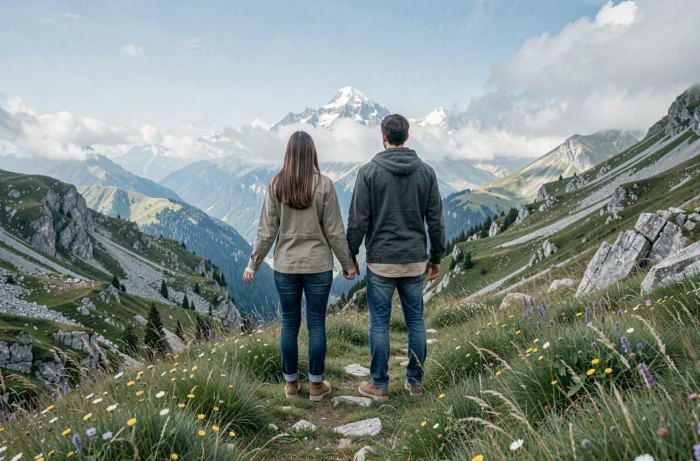
Biking and walking: adapting the mode of transport to the rhythm of the landscape
Biking and walking are not “alternative” modes of transport. They are the oldest modes of movement, imposing a relationship to the territory that neither trains nor cars allow. By bike, one covers between forty and eighty kilometers a day depending on the terrain and physical condition. On foot, about fifteen. These distances require breaking the territory into digestible segments, and each segment becomes a unit of experience.
The physical constraint plays a role that slow travel narratives often underestimate. Muscle fatigue after a day of cycling alters the perception of the evening meal, the bed, and the landscape of the following morning. One does not “consume” the landscape: one traverses it with one’s body, and this crossing leaves a lasting sensory imprint.
Choosing a route suitable for one’s actual level
The main mistake is overestimating one’s daily capacity. A beginner cyclist planning one hundred kilometers a day on a hilly bike route turns their slow travel into a sporting challenge. The result is the opposite of slow travel: stress, pain, frustration.
Some concrete guidelines for calibrating a route:
- Plan a rest day every three to four days of cycling, especially in hilly terrain.
- Limit stages to a distance achievable in four to five hours of riding, to allow time for exploration upon arrival.
- Include at least two consecutive nights in the same place in the middle of the route, allowing for walking around the drop-off point.
- Check for train stations along the route to shorten a stage in case of fatigue or bad weather.
This type of planning transforms a bike trip project into a truly slow experience, where the journey becomes the stay rather than a simple transfer between two accommodations.
Carbon footprint of slow travel: the numbers that matter
The train emits a fraction of the emissions of a short-haul flight over an equivalent distance in Europe. This data is known. What is less known is that extending the stay significantly reduces the footprint per vacation day, even if the round-trip transport remains the same.
A flight from Paris to Barcelona followed by a four-day stay generates a footprint per day much higher than the same flight followed by a three-week stay. The logic is arithmetic: transport emissions are diluted over a larger number of days. Slow travel thus acts on two simultaneous levers: the choice of transport mode and the duration of the stay.
The question of digital consumption while traveling
A rarely addressed angle: digital consumption while traveling. Posting stories in real-time, streaming series in the hotel at night, continuously using GPS—all of this consumes energy and data. The slow traveler who partially disconnects from their screens also reduces this share of footprint, albeit minor compared to transport, but consistent with the overall approach.
Traveling slowly means accepting not to see everything. One gives up the exhaustive list to gain depth. One trades the quantity of destinations for the quality of the relationship to the place. Three weeks in the same village in the Cévennes teach more about a territory than a circuit of five capitals in ten days.