
Ranking countries according to their degree of secularism requires going beyond the simple constitutional criterion. A state can declare itself secular in its fundamental law while imposing severe restrictions on certain faiths, or conversely guarantee broad religious freedom despite the existence of an official religion. In recent years, we have observed a methodological shift that redefines the reading of global secularism rankings.
Government Restrictions and Secularism: A More Reliable Indicator than the Constitution
Recent approaches, particularly those based on the index of government restrictions on religious freedom (using Pew Research data), overturn several preconceived notions. They measure the level of concrete state intervention in religious matters, regardless of what the constitutional text proclaims.
Related reading : Complete test and review of the Teccpo TDLM01G electric mower: performance and reliability
The result is clear: some officially secular states exhibit a high level of religious control, while constitutional monarchies with a state religion may, in practice, impose fewer constraints on individuals. China declares itself secular, but the level of regulation of religious practices there exceeds that of many declared theocracies. Conversely, the United Kingdom, whose monarch is the head of the Anglican Church, shows a low rate of practical restrictions.
This analytical framework necessitates distinguishing three layers: constitutional status (secular, secularized, state religion), legislative framework (blasphemy laws, public funding of religions, mandatory religious education), and daily administrative practice (control of sermons, monitoring of religious associations, dress code restrictions). A map of secular countries in the world that intersects these three dimensions offers a much more precise reading than a simple binary color code.
Further reading : Discover the best alternatives to replace Tirexo and access your favorite content

The French Model of Secularism vs. European Secular Variants
French secularism remains a unique case in comparative law. The 1905 law on the separation of church and state establishes a strict framework: the Republic does not recognize, pay, or subsidize any religion. This principle of non-recognition has no exact equivalent in other European democracies.
Germany has no official religion and guarantees state neutrality towards faiths. Religious institutions cooperate with the public authority, which finances them through a religious tax levied on declared believers, benefiting the Catholic, Protestant, and Jewish faiths. An extension to the Muslim faith is regularly discussed. This tax tithe mechanism places Germany at the opposite end of the French model.
Belgium, Switzerland, and the Netherlands practice forms of soft separation, where the state finances certain religious activities (chaplaincies, heritage, confessional education in the public network) without designating an official religion. These countries regularly rank among the most secularized in the world in terms of individual religious practice, but their legal framework is not secular in the French sense of the term.
State Religion in Europe: A Formal Maintenance
Several European states retain an official religion. Denmark recognizes the Evangelical Lutheran Church, Greece places Orthodoxy in a constitutionally dominant position, and England maintains the organic link between the Crown and Anglicanism. These arrangements coexist with some of the highest levels of religious freedom in the world, confirming that constitutional status does not predict the actual degree of freedom of conscience.
Constitutional Secularism Outside the West: Turkey, Tunisia, India
Mexico, Turkey, India, and several African countries enshrine secularism or secularization in their constitutions. The trajectories diverge radically.
- Turkey enshrined secularism in its constitution as early as 1928, under Kemalist influence. The Diyanet (Presidency of Religious Affairs) controls Sunni Islam, pays imams, and supervises the content of sermons. This model of state-controlled secularism does not correspond to the French separation or Nordic neutrality.
- Tunisia, after the 2014 Constitution, has consolidated freedom of conscience and belief while maintaining the reference to Islam as the state religion. Judges, constitutionalists, and NGOs see it as a trajectory of increasing separation between political institutions and religious authorities, without achieving strict secularism.
- India defines itself as a secular republic since the constitutional amendment of 1976. Each religious community retains a distinct personal law (marriage, inheritance, adoption), which creates a legal pluralism that is difficult to reconcile with the principle of uniformity of secular law.
Inclusive Neutrality: A Post-2020 Trend in Liberal Democracies
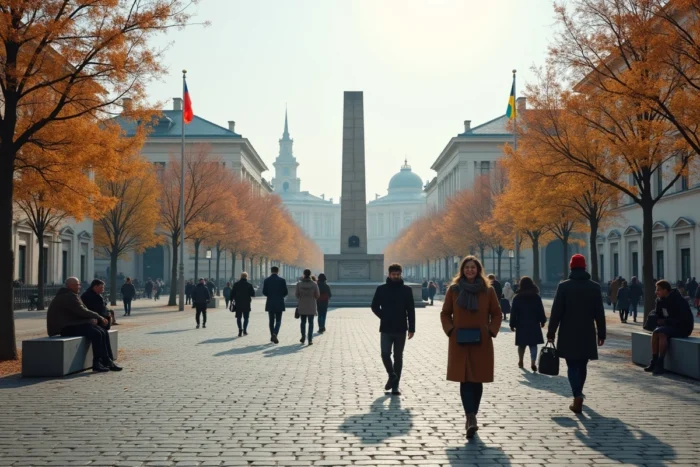
We are witnessing a shift in several liberal democracies towards what analysts refer to as inclusive neutrality secularism. This model aims to ensure equal treatment of both religious and non-religious beliefs, without privileging non-belief or marginalizing religious expression in the public space.
Canada, New Zealand, and some Scandinavian countries illustrate this trend. The approach is based on reasonable accommodation rather than prohibition. It stands in stark contrast to the French model of strict neutrality of public agents and the invisibility of religion in the institutional sphere.
The debate crystallizes around two interpretations of freedom: freedom through the removal of religion from the common space, or freedom through the visible coexistence of all beliefs. No global ranking can be neutral on this point, as the criterion chosen (government restriction, constitutional status, individual practice, freedom of conscience) mechanically determines the outcome.
Limitations of Existing Rankings
The maps and rankings available online often amalgamate countries with incomparable realities. Placing France and China in the same “secular state” category simply because their constitutions do not mention an official religion ignores the nature of the political regime. A useful ranking must at least intersect the legal framework, the level of practical restrictions, and the degree of institutional pluralism.
The global map of secularism remains a tool for orientation, not a verdict. It gains relevance when it incorporates dynamic indicators (evolution of restrictions over five or ten years) rather than a frozen constitutional snapshot. The highest-ranked countries are not necessarily those that proclaim themselves secular, but those where freedom of conscience is verified in daily administrative and judicial practice.