Your salads go to seed in July, your flower beds turn brown by September, and the garden hibernates from November to March. This pattern is not a given. Successfully growing a productive vegetable garden and maintaining a pleasant garden year-round relies on a few concrete choices, often overlooked in traditional guides.
Organic Waste and Compost in the Vegetable Garden: What Has Changed Since 2024
Before discussing sowing or mulching, a regulatory point deserves your attention. Since January 1, 2024, local authorities must provide residents with a solution for sorting organic waste at the source: separate collection or local composting.
Specifically, your town hall or intercommunal authority may provide you with an individual composter, sometimes for free. Check before buying one. Verify your municipality’s system before any purchase, as some subsidized models are suited for the volumes of a family vegetable garden.
Compost produced locally replaces some commercial amendments. It nourishes soil life (earthworms, mycorrhizal fungi, bacteria) and improves water retention. The resources available on graine-de-jardinier.com detail this connection between living soil and abundant harvests.
Mulching and Soil Cover: The Action That Changes Vegetable Garden Productivity
You may have noticed that some plots yield vigorous vegetables without special input? The difference often lies in soil that is never left bare.
Keeping the soil covered at all times with organic mulch is the most cost-effective action in the vegetable garden. Dead leaves, dried grass clippings, straw, wood chips: these materials decompose slowly and nourish underground life.
Why Bare Soil Is Problematic
A soil exposed to sun and rain compacts. Water runs off instead of soaking in. Weeds colonize the free surface. The result: more weeding, more watering, fewer harvests.
Mulching acts on three fronts simultaneously:
- It limits evaporation and reduces watering frequency, a direct advantage in the face of drought restrictions that may affect your municipality according to current prefectural orders
- It slows the germination of weeds by depriving their seeds of light
- It transforms into humus over the months, improving soil structure without tilling
Between crops, sow a green manure (phacelia, mustard, clover). These plants cover the soil, fix nitrogen for some, and are mowed before the next crop. A soil covered twelve months a year produces more than a worked soil that is then abandoned.
Perennial Flowers and Shrubs to Beautify the Garden Without Extra Maintenance
Beautifying the garden is not limited to annuals replanted every spring. Perennials and small fruit shrubs combine aesthetics and utility over several years.
Combining Flowers and Vegetables in the Vegetable Garden
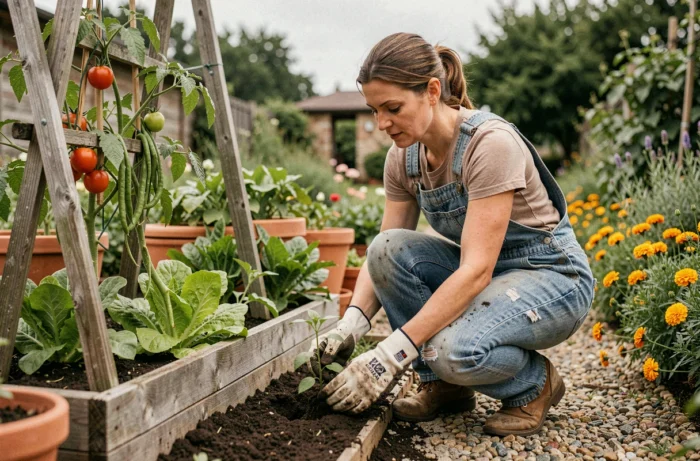
Some flowers play a concrete role in protecting crops. Marigolds (calendula) attract hoverflies, whose larvae consume aphids. Nasturtiums serve as trap plants: aphids settle on them and neglect your beans.
Choose perennials suited to your climate rather than demanding annuals. Lavender, sage, yarrow, echinacea: these plants return every year, nourish pollinators, and require little water once established.
Small Fruit Shrubs for a Productive Garden in Winter
A currant bush, a blackcurrant bush, or a raspberry bush adds visual structure to the garden even in the cold season. Their branches remain present, and some varieties of remontant raspberries produce until the first frosts.
Plant them along the edge of the vegetable garden. They serve as a light windbreak for low crops and provide habitat for beneficial garden creatures.
Water Management in the Garden: Adapting Watering to Local Constraints
Standard advice (water in the morning, at the base of plants) remains valid. However, it is no longer sufficient in the context of recurring droughts.
Check the prefectural orders in your department before planning your watering. Restrictions may apply to the vegetable garden, flower beds, and even the filling of rainwater tanks, depending on the drought alert level.
Some concrete adjustments to reduce your water consumption:
- Prefer drip irrigation over watering cans or hoses to limit evaporation losses
- Install a rainwater collector connected to a gutter, ensuring your municipality does not restrict their filling during a crisis
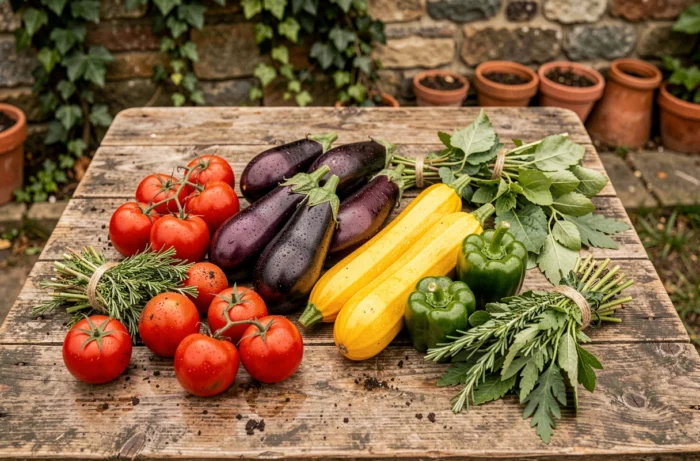
- Group plants by water needs: tomatoes and zucchinis together, Mediterranean herbs in a drier area
This organization by zones, sometimes called hydrozoning, avoids wasting water on plants that do not need it.
Vegetable Garden and Garden in Winter: Preparing for Spring as Early as Autumn
The garden does not sleep in winter; it prepares. Pruning hardwood shrubs is done between November and February, outside of frost periods. It is also the ideal time to plant bare-root shrubs, which establish better than container-grown plants.
In the vegetable garden, autumn is the time for green manures and thick mulching. Spread a layer of shredded dead leaves over empty plots. In spring, it will be enough to move aside the mulch to sow directly.
Some crops tolerate the cold very well: lamb’s lettuce, winter spinach, garlic, fava beans. Installing them in October or November allows for harvesting before spring sowing and occupies the soil during the off-season.
A garden that remains alive and structured in winter requires no more work. It simply requires planting at the right time, with species that tolerate the cold and shrubs whose silhouettes remain interesting even without leaves. The true comfort of the gardener is a covered soil, established perennials, and a cultivation calendar that runs smoothly without interruption.