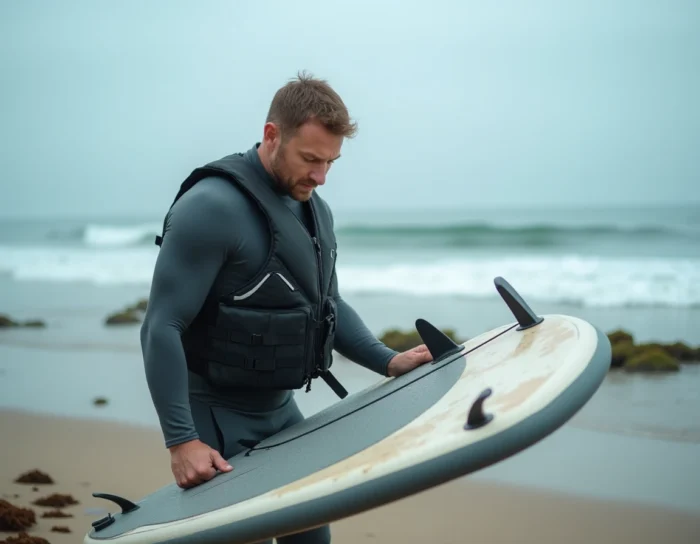
The choice of water sports equipment relies on technical parameters that product sheets do not always highlight. Buoyancy level, neoprene thickness, recent regulatory compliance: we review the points that make the difference between suitable equipment and a regrettable purchase from the first outing.
Regulation Division 240 and its impact on the choice of water equipment
Since the amendment to Division 240 that came into effect at the end of 2023, users of motorized watercraft (jet skis in particular) must wear a neoprene garment of at least 2 mm at all times, in addition to individual buoyancy equipment. A shorty, neoprene shorts, or a full wetsuit are acceptable, provided they meet this minimum thickness.
The required buoyancy level varies depending on the distance to shelter: 50 N up to 2 nautical miles, 100 N between 2 and 6 nautical miles. This threshold directly determines the type of vest to be carried. A standard buoyancy aid (50 N) is sufficient for coastal jet skiing, but any outing beyond requires an inflatable or foam life jacket rated at a minimum of 100 N.
The decree of October 11, 2024, amending this same Division 240 also makes the use of a kill switch mandatory for the pilot as soon as the engine is running, including for towed activities (buoy, wakeboard). The device must be connected to the wrist, leg, or the driver’s buoyancy equipment. In practice, this means that the vest must have an attachment point compatible with a kill switch leash, which not all models offer.
Before purchasing, we recommend checking the H2O Sport website to verify the compatibility of vests and wetsuits with these updated regulatory requirements.
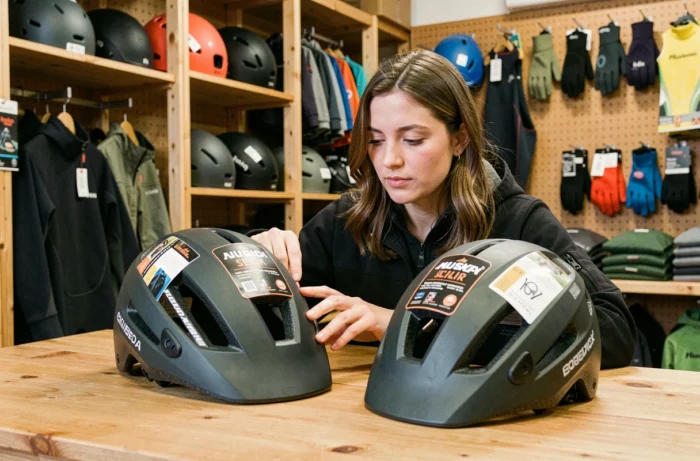
Life jackets and buoyancy aids: technical selection criteria
The confusion between life jackets and buoyancy aids remains common, even among experienced practitioners. The two serve distinct purposes and are not interchangeable from a regulatory standpoint.
- The buoyancy aid (50 N) keeps the user on the surface but does not turn an unconscious person over. It is suitable for kayaking, paddleboarding, and light sailing near the shore.
- The life jacket (100 N and above) ensures the turning of an unconscious person face up. Required for motor navigation beyond 2 nautical miles and for towed activities.
- Inflatable models (150 N or 275 N) are intended for offshore navigation. Their activation can be manual, automatic via a hydrostatic trigger, or hybrid. The activation mechanism must be checked and replaced according to the manufacturer’s recommendations.
An ill-fitting jacket will ride up over the head upon immersion and lose all safety function. This technical point is often underestimated, even in light sailing where practitioners wear jackets that are too loose, held by a single waist strap.
The correct method: put on the jacket, tighten all straps, then ask someone to pull firmly upwards at the shoulders. If the jacket slips more than a few centimeters, the size is inappropriate.
Neoprene wetsuits for water sports: thickness and fit according to practice
The thickness of neoprene is not chosen solely based on water temperature. The type of activity, duration of immersion, and level of physical effort significantly alter thermal needs.
For towed activities (wakeboarding, tubing), the body remains exposed to the wind between runs. A shorty is sufficient in mid-summer in the Mediterranean, but a full wetsuit of 3/2 mm is necessary as soon as the water temperature drops below comfort thresholds, or for sessions longer than one hour in the Atlantic.
In sailing or kayaking, the practitioner alternates between effort and static phases. The cut of the wetsuit must allow full range of motion at the shoulders without creating excessive folds at the elbow or knee. Glued and blind-stitched seams limit water entry compared to flatlock seams, which are more suited for warm waters.
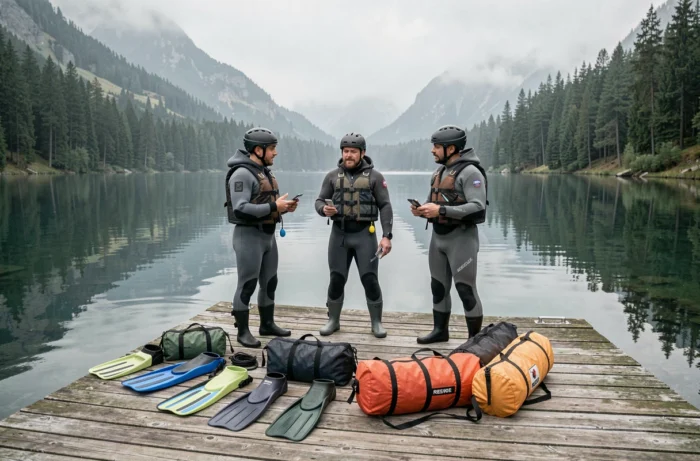
Systematic rinsing with fresh water after each use significantly extends the lifespan of neoprene. Drying should be done in the shade, on a wide hanger: a thin hanger distorts the shoulders and creates weak points in the material.
Safety accessories often overlooked in recreational boating
Beyond the jacket and wetsuit, several safety accessories condition regulatory compliance and the actual safety of an outing.
The safety leash, mandatory for paddleboarding and recommended for any sliding activity, must be adapted to the type of practice. An ankle leash is suitable for surfing, but in paddleboarding on calm water, a coiled leash attached to the calf or waist prevents it from dragging in the water and reducing propulsion.
Polarized sunglasses with a retention cord protect against glare, which is particularly aggressive on the water. The criterion to check: the filtration category (category 3 minimum for navigation, category 4 for offshore, but the latter is prohibited for driving).
The dry bag remains a simple accessory, but its quality varies greatly. A high-frequency welded bag with an air purge valve offers significantly better waterproofing than simple roll-top models, especially for protecting a phone or onboard documents.
Regulatory compliance evolves regularly, and a jacket purchased a few years ago may no longer meet the current requirements of Division 240. Checking the validity dates of the activation devices of inflatable jackets, inspecting the condition of the wetsuit seams at the beginning of the season, ensuring that the kill switch is compatible with the jacket: these checks take a few minutes and make all the difference on the water.