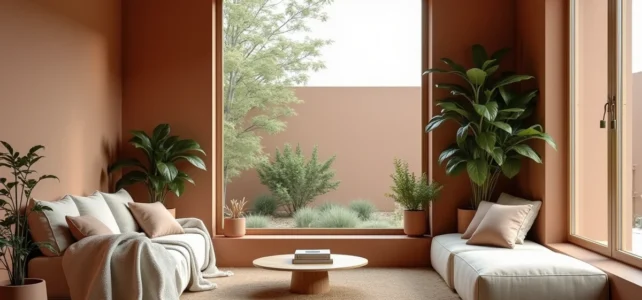
Transforming a house into a haven of peace is not just about choosing a palette of soft colors. The work involves circulation, tactile textures, the rituals of use for each room, and the ability of the space to support micro-moments of recovery. Here are ten concrete levers, drawn from current practices in interior design, to achieve this.
1. Functional micro-zoning of living spaces
Read also : 10 Simple and Effective Actions to Reduce Your Carbon Footprint Daily
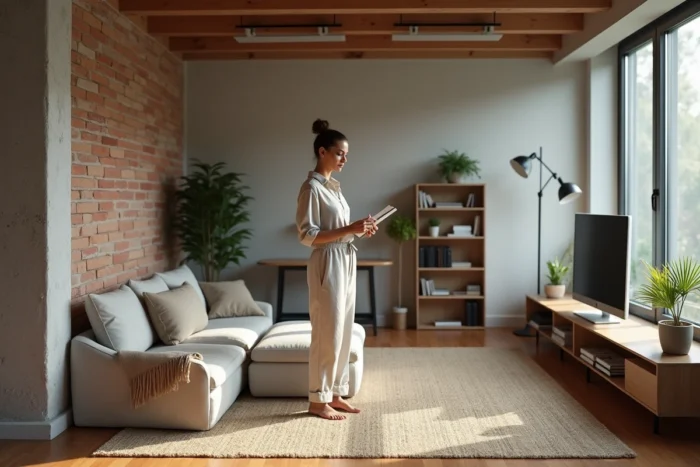
Dividing a room into specific usage zones changes the perception of volume as much as actual comfort. A two-square-meter reading nook, defined by a rug and an adjustable reading lamp, works better than a large living room without a clear purpose.
We recommend defining at least three micro-zones in the main room: conviviality (sofa, low seating), concentration (desk or wall console), and passive rest (armchair facing a natural light source). This logic of distinct conviviality zones reduces usage conflicts and the feeling of disorder.
Further reading : Get Inspired for Your Home Projects: Ideas and Tips for Successful Renovations
To deepen your layout choices room by room, you can visit the Perspective Maison website, which details configurations suitable for each type of housing.
2. Raw materials and tactile textures
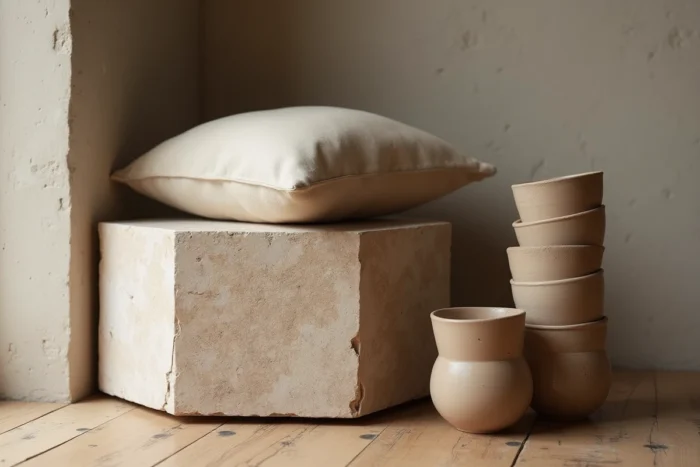
Solid wood, washed linen, woven rattan, and natural stone share a common point: they offer a tactile variation that smooth and synthetic surfaces do not replicate. This sensory diversity is a direct lever for relaxation.
Alternating at least three different textures per room (a rough textile, an open-grain wood, a mineral element) creates visual richness without overwhelming. Rattan, in particular, brings a structural lightness useful in small spaces.
3. Restricted color palette with earthy tones
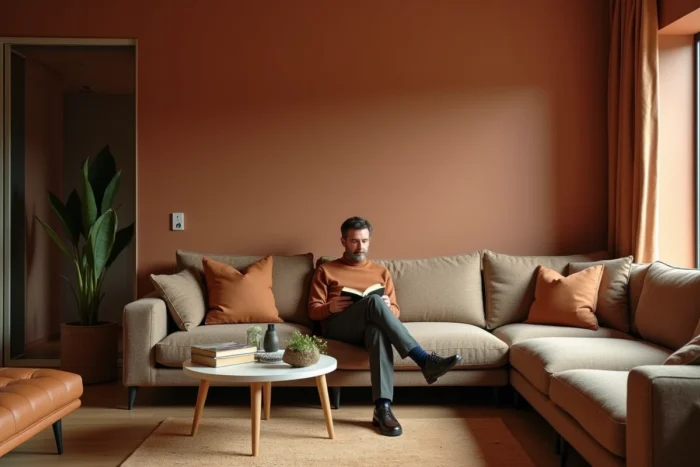
Limiting the palette to four or five shades maximum per room eliminates visual noise. Earthy tones (off-white, sand beige, muted terracotta, sage green) serve as a neutral background without falling into the coldness of all-white.
A common mistake is to add overly saturated accent colors. A dark ochre cushion or a brown stoneware vase is enough to punctuate the space. Color sobriety requires less decoration, not more.
4. Layered lighting to modulate the atmosphere
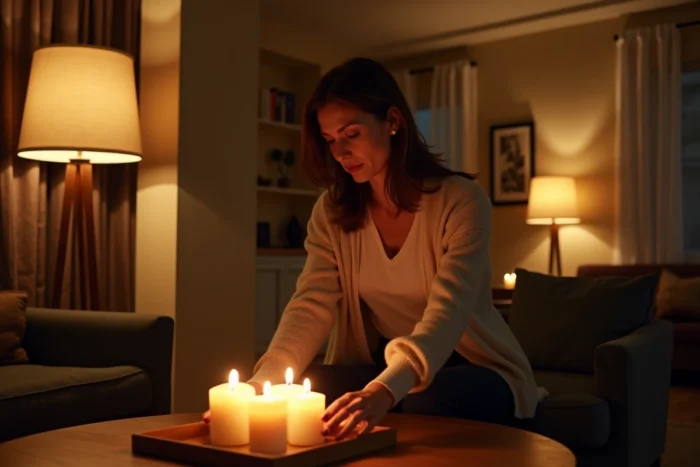
A single ceiling light flattens the volumes and strains the eyes. We favor a three-layer system: soft general light (suspension with dimmer), task light (reading lamp, desk lamp), and ambient light (low-voltage garland, candle).
Changing the lighting according to the time of day is a simple ritual that transforms the perception of space. Lowering the general intensity after dinner and switching to side sources signals to the body that the recovery phase begins.
5. Living plants positioned by function
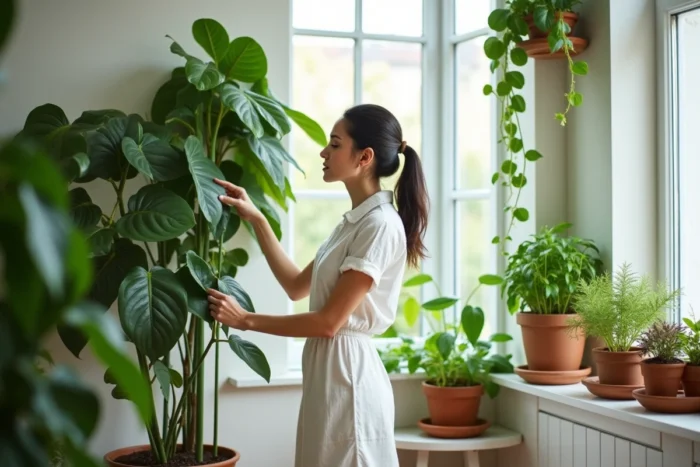
Accumulating plants without logic creates a greenhouse effect, not a calming effect. Each plant benefits from fulfilling a specific role: a large floor plant (ficus, monstera) anchors an empty corner, hanging plants lighten a low ceiling, and an aromatic plant in the kitchen stimulates the sense of smell.
Three to five well-placed plants are sufficient for a standard living room. Maintenance should remain realistic: it’s better to have two healthy robust plants than a dozen struggling specimens.
6. Decluttering routines by micro-zones
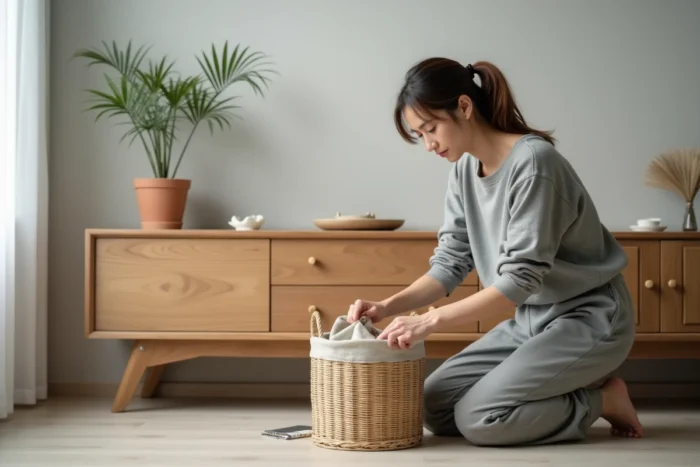
Occasional tidying does not last over time. Micro-structured routines produce better results: one priority area per day, a single collection basket for items in transit, and strict limits on automatic drop-off surfaces (no more than two throughout the home).
This system reduces decision fatigue related to visual clutter. The entryway, coffee table, and kitchen countertop are the three critical areas to address as a priority.
7. Mini-spa corner in the bathroom
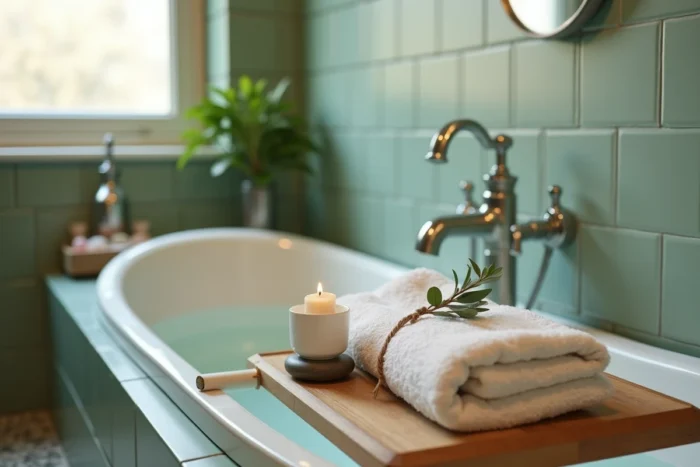
The trend to create a “holiday feeling” at home passes through the bathroom. A raw wood stool, rolled towels within reach, a candle, and a container for bath salts transform a functional space into a micro-zone for recovery.
The goal is not to replicate a professional spa but to ritualize the moment. Putting the phone out of the room and using side lighting instead of the ceiling light radically changes the experience.
8. Smooth circulation and clearance of passages
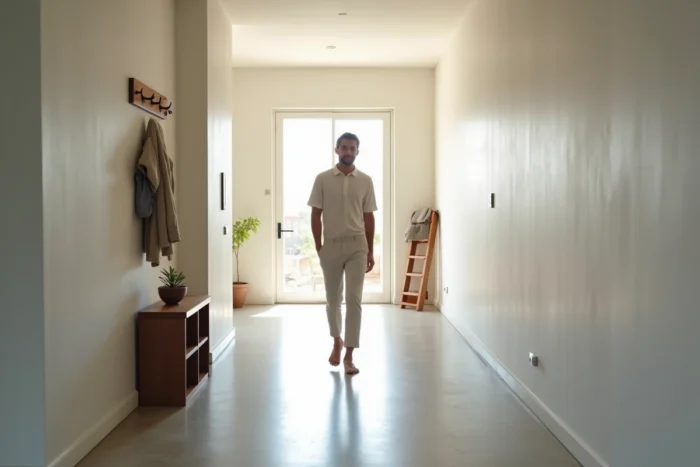
A calming interior is navigated effortlessly. Each passage between two rooms must remain clear across its entire width. Furniture placed in the flow of circulation generates unconscious physical tension.
We observe that clearing the visible floor at eye level amplifies the sensation of space much more than adding mirrors. Removing just one misplaced piece of furniture can be enough.
9. Targeted sound insulation at nuisance points
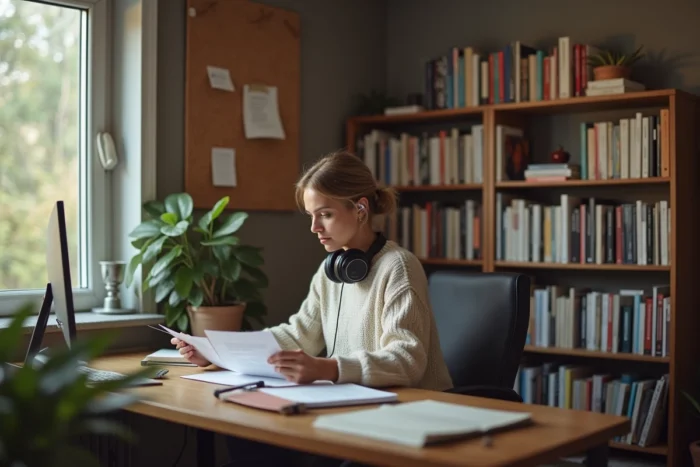
Noise is the most underestimated domestic stress factor. A thick lined curtain, a dense rug under the dining table, felt pads under chairs: these targeted interventions reduce nuisances without heavy renovations.
- Blackout lined curtains for street-facing windows
- Low or medium pile rugs in high-traffic areas
- Bookshelf filled against a noisy shared wall
10. Daily space usage rituals
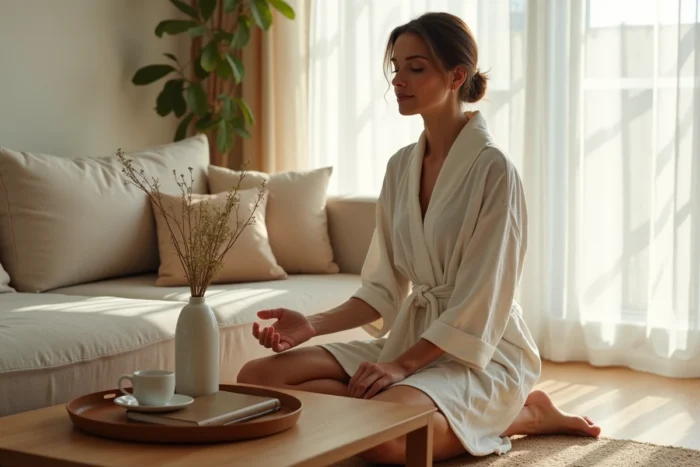
Changing where you have your coffee, walking barefoot on natural materials, opening the windows for ten minutes every morning: these usage rituals matter as much as decoration. They transform a static decor into a lived and regenerating environment.
Layout is just a support. It’s the way we inhabit each zone that produces, or not, the feeling of a haven of peace. A perfectly decorated interior but used on autopilot provides no real soothing.