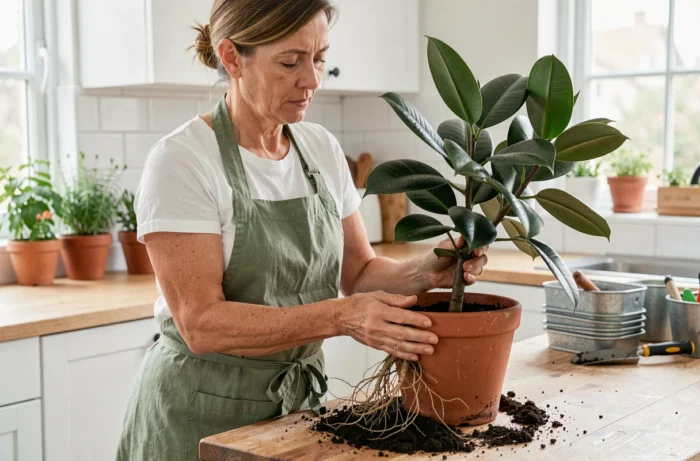
A Ficus benjamina that has been in the same pot for three years is starting to show roots coming out of the drainage holes. We decide to repot it, and ten days later, half of the foliage is strewn on the ground. This scenario is common, but not inevitable. Leaf loss after repotting is less about the operation itself and more about the accumulation of micro-changes that the plant undergoes simultaneously.
Ficus benjamina and sensitivity to variations: the real trigger for leaf drop
The benjamina does not react to repotting as a simple root stress. It reacts to any combined change in its routine: light, drafts, watering frequency, ambient temperature. Repotting often involves moving the pot, watering it differently afterward, or leaving it outside for a few hours during the operation. Each of these adjustments, taken individually, is enough to cause yellowing followed by leaf drop within the week or two that follow.
The natural reflex when leaves fall is to increase interventions: moving the plant to a brighter spot, increasing watering, adding fertilizer. This is precisely the opposite of what should be done. According to recent horticultural guides, stabilizing the routine completely for three to four weeks after repotting yields much better results than trying to correct each symptom as it arises.
Specifically, we repot the ficus in the exact spot where it lives, place it back in the same location, and do not touch anything else. No pot rotation, no room change, no new exposure.
For those looking to repot a Ficus benjamina easily without causing this vicious cycle, this logic of post-repotting stability is the foundation of everything else.
Drainage substrate for ficus: the mineral component that most potting soils ignore
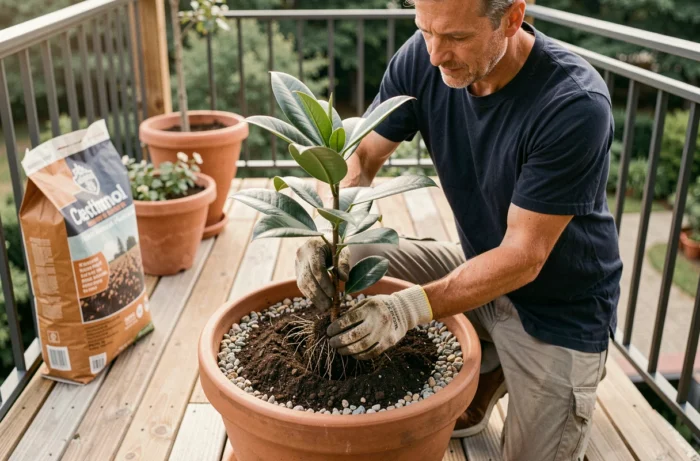
Everywhere, the advice is to use a “potting soil for green plants.” The problem is that these commercial potting soils often retain too much water for an indoor potted Ficus benjamina. The roots remain in a waterlogged environment, which promotes rot and, consequently, leaf drop.
Recent horticultural recommendations advocate for a substrate with a high mineral component and a pH close to neutral. A classic potting soil is mixed with perlite or pumice, aiming for at least one-third mineral material in the total volume. This proportion ensures quick drainage while retaining enough moisture so that the roots do not dry out between waterings.
- Base potting soil: it serves as a nutrient reserve and structural support but should not represent more than two-thirds of the mix.
- Perlite or pumice: these materials lighten the substrate, create air pockets around the roots, and prevent compaction over time.
- Pine bark in small pieces: it further improves drainage and decomposes slowly, aerating the substrate over time.
Fine sand should be avoided, as it tends to clog the bottom of the pot and produces the opposite effect of what is desired. The practical test: after a thorough watering, the water should drain through the drainage holes in less than thirty seconds. If it stagnates on the surface, the mix is too compact.
Timing and pot size: two common mistakes when repotting Ficus benjamina
It is often said that repotting should be done in spring. This is the ideal time, as the plant enters a phase of active growth and tolerates root handling better. In contrast, repotting in the middle of winter exposes the ficus to double stress: root disturbance and a slowed metabolism due to lack of light and lower indoor temperatures.
The other trap concerns the size of the new pot. Moving from a small container to a much larger pot seems logical to “give it space.” In practice, the excess substrate around the roots remains perpetually moist, as it is not explored by the root system. This stagnant moisture promotes mold and rot. One should choose a pot whose diameter exceeds that of the old one by two to three centimeters, no more.
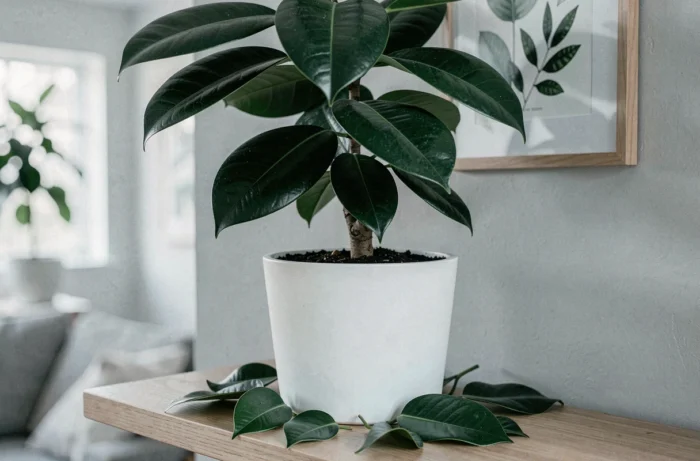
Before removing the root ball, lightly water the day before so that the substrate detaches more easily. Untangle the outer roots without cutting them, unless they are densely spiraled at the bottom of the pot (a sign that they have been seeking space for a long time). In this case, one can cleanly cut the longest roots with disinfected pruning shears.
Watering and fertilizing after repotting: what to adjust and what to leave alone
Right after repotting, water only once, thoroughly, so that the new substrate adheres to the roots. Then, wait for the top inch of soil to dry before watering again. Excess water in the days following repotting is the primary cause of root rot.
As for fertilizer, we wait. Freshly handled roots absorb nutrients poorly, and an early application can burn the root tips. We wait at least three to four weeks before introducing a liquid fertilizer for indoor plants, diluted to half the recommended dose on the packaging.
- First week: moderate watering, no fertilizer, no moving the pot.
- Second to fourth week: monitor the foliage without intervening. A slight leaf drop remains normal.
- From the fifth week: resume a regular watering schedule and start fertilizing if the plant shows signs of recovery (new light green shoots).
Ambient humidity also plays a often underestimated role. A Ficus benjamina placed near a radiator in winter suffers from very dry air that exacerbates leaf drop. Misting the foliage once or twice a week or placing the pot on a saucer of wet clay pebbles helps maintain a proper humidity level around the plant.
Full recovery after repotting generally takes several weeks. If the ficus continues to lose leaves massively beyond a month, opinions vary on this point, but it is often useful to check the state of the roots: black and mushy roots signal excess water, while dry and brittle roots indicate the opposite. Adjusting watering based on the feel of the substrate remains the most reliable action, far more than a fixed schedule.