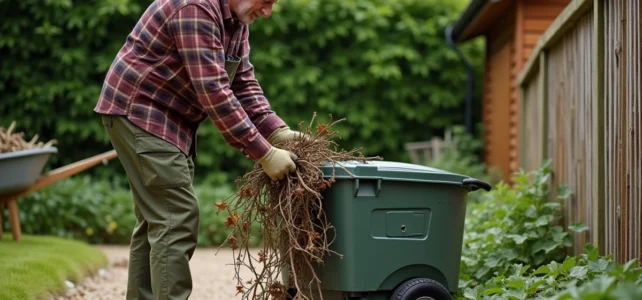
A garden shredder transforms branches, hedge trimmings, and woody debris into reusable fragments at the base of plants. All shredders reduce the volume of green waste, but not all produce a mulch suitable for landscaping. The type of cut, the motorization, and the nature of the processed plants directly determine the granularity of the result, and thus its lifespan once spread on the ground.
Cutting system and granularity of the mulch: the criterion that guides often overlook
Most buying guides compare power and cutting diameter. For mulching, the texture of the mulch is what matters most. Mulch that is too fine decomposes within a few weeks and loses its covering function. Coarse mulch stays in place for several months and slows the emergence of weeds.
Further reading : How to Choose the Best Wardrobe to Optimize Your Interior Space
Three cutting systems coexist on the market, and each produces a different result.
- Disc blade shredder: it generates fine, almost fibrous mulch that decomposes quickly. This result is better suited for compost or chipped wood (BRF) than for long-lasting mulching.
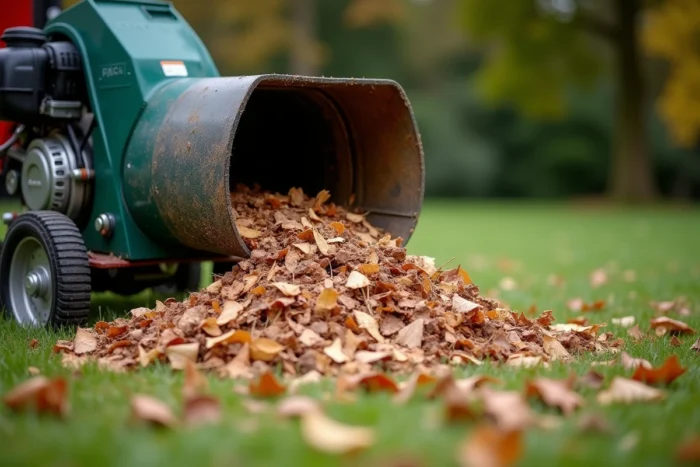
- Rotary shredder: it crushes and tears branches, producing coarser and more irregular pieces. This type of mulch decomposes slowly, making it a good candidate for surface mulching at the base of shrubs and in flower beds.
- Turbine shredder: it combines suction and cutting, with a result similar to the rotary shredder but often more homogeneous. Decomposition remains slow, suitable for durable soil coverage.
When considering shredding plants for mulching, the distinction between these three technologies becomes a real selection criterion, not a secondary technical detail.
See also : How to Easily Access the 192.168.1.1 Interface to Configure Your Internet Box
Sick plants and shredding: an underestimated health risk
Shredding branches affected by downy mildew, powdery mildew, or canker, and then spreading the mulch as a cover, amounts to disseminating pathogens directly in contact with the roots. Consumer guides rarely mention this limitation.
The rule is simple: any visibly sick plant must be excluded from the shredder intended for mulching. Twigs with spots, necrosis, or visible fungi should be taken to a waste disposal site or incinerated if local regulations allow.
For highly lignified plants (branches over a few centimeters in diameter), the resulting mulch is dense and decomposes very slowly. This is an advantage for mulching perennials or fruit trees, but a disadvantage if the soil needs a quick organic input. In this case, pre-composting the mulch for several months is preferable to direct application.
Shredder motorization: gas or electric depending on the area
The choice between a gas engine and an electric motor is not just a personal preference. It depends on the size of the land, the volume of waste produced each season, and the proximity of a power outlet.
Wired or battery electric shredder
Wired electric models are suitable for common domestic use: hedge trimming, cleaning flower beds, maintaining a moderately sized garden. They are lighter, quieter, and require no special motor maintenance.
Battery-powered shredders offer more mobility, which is appreciated in a large garden without accessible outlets. However, their autonomy and power lag behind wired models.
Gas shredder for large areas
Gas shredders run on gasoline and deliver significantly higher power. They are designed to handle large volumes of thick branches, typically in properties with several trees, long hedges, or orchards.
Their weight, noise level, and maintenance costs (oil change, filter, spark plug) make them suitable for gardeners facing regular and large shredding sessions. For a small urban garden with a few shrubs, an electric model is more than sufficient.
Thickness and application of mulch from the shredder
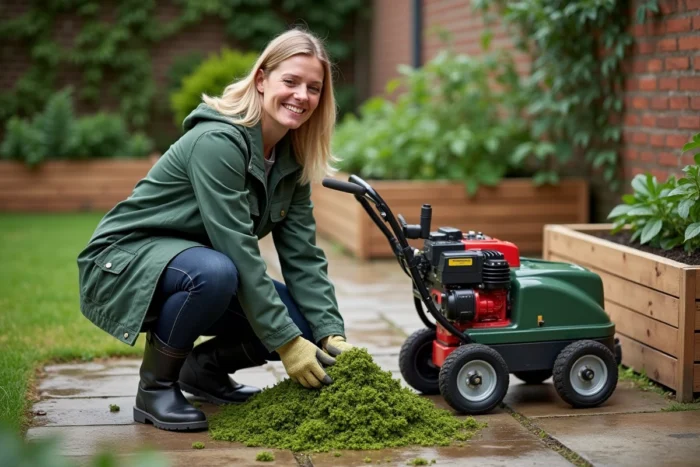
Having a suitable shredder does not guarantee successful mulching if the thickness of the layer is poorly calibrated. A mulch that is too fine or too thin allows light to pass through and encourages weed germination.
For mulching to fulfill its function (limit evaporation, regulate soil temperature, slow down weeds), the layer must be thick enough to block light without suffocating the soil. Coarse mulch from a rotary or turbine shredder allows achieving this thickness with less material, as the fragments do not compact as much as fine mulch.
Adapting the mulch to the type of planting
- Shrub beds and tree bases: coarse mulch, slow decomposition, renewal once or twice a year.
- Vegetable garden between rows: medium to fine mulch, which nourishes the soil as it decomposes. Plan for a nitrogen input if the mulch is very woody, as the decomposition of wood mobilizes nitrogen from the soil and can create a temporary nitrogen deficiency.
- Garden paths: coarse mulch, slightly compacted, that withstands foot traffic and lasts longer than fine organic mulch.
The choice of shredder determines the quality of the mulch well beyond simple volume reduction. A rotary or turbine shredder naturally leads to durable mulching, while a disc blade produces material that composts faster than it protects the soil. Keeping this logic in mind at the time of purchase prevents ending up with mulch unsuitable for the intended use.