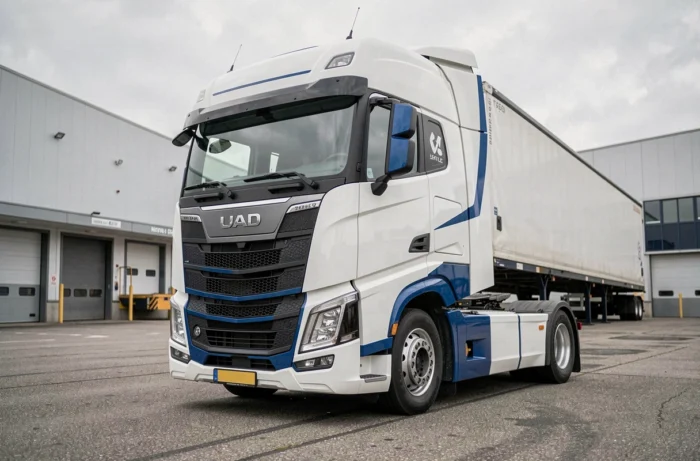
When you order a package or when a supermarket receives its pallets of fresh products, a road transport company has ensured the connection. The road freight transport sector in France is worth several tens of billions of euros and employs hundreds of thousands of people. But behind this mass, a few large groups concentrate a significant share of national logistics flows.
Acquisitions and mergers: the map of French road transport is being redrawn
The rankings of the largest transporters change faster than one might think. The reason: external growth operations are multiplying. Large groups absorb regional specialists to expand their geographical coverage or add expertise (refrigerated, bulk, courier).
A recent example illustrates this movement well. In August 2026, Geodis, the logistics subsidiary of the SNCF group, announced the integration of the Normandy-based Malherbe group, located in Rots in Calvados. The stated goal: to aim for the top 3 of French road transport through this acquisition. This type of operation reshuffles the established rankings, as annual rankings do not always reflect the most recent mergers.
To better understand who the main road transport companies in France are, one must look beyond gross revenue and closely follow these recompositions.
Shortage of truck drivers: the real brake on fleet growth
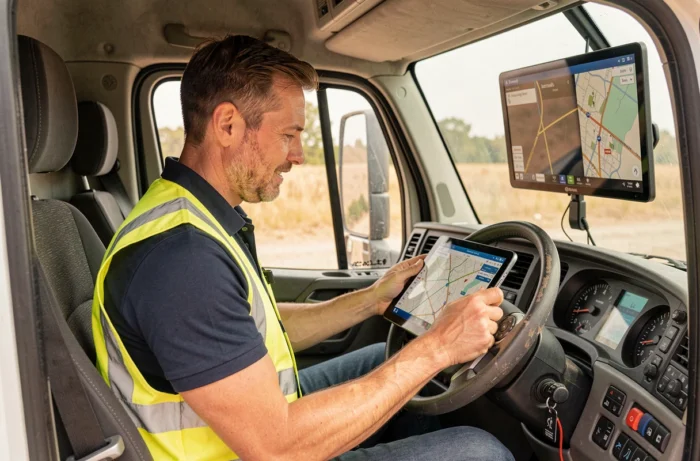
Have you noticed that some transporters refuse contracts due to a lack of available drivers? This is not anecdotal. The shortage of truck drivers is a structural problem affecting the entire sector, from regional SMEs to national leaders.
The issue is not limited to the number of licenses issued. Many holders of heavy vehicle licenses do not wish to pursue the profession long-term, due to scheduling constraints, family distance, and working conditions on the road. Projections indicate that this employment tension is expected to persist at least until the mid-2030s.
A direct consequence for large transport companies: they are investing in retention. Bonuses, improved cabin comfort, better-organized schedules. This human factor weighs as much as the size of the fleet in a transporter’s actual capacity to meet its commitments.
Decarbonization of fleets: regulatory obligations and on-the-ground reality
The ecological transition of road transport is no longer a theoretical subject. The LOM law (Mobility Orientation Law) requires companies with large fleets to renew an increasing share of their vehicles with low-emission models. This timeline is accelerating and directly affects the players in the rankings of the top French transporters.
Electric trucks and charging infrastructure
Several manufacturers now offer electric heavy trucks. On the ground, feedback shows that these vehicles perform well for urban or regional distribution, particularly in refrigerated transport. A 100% electric refrigerated truck, for example, eliminates both engine emissions and the noise of the diesel refrigeration unit.
The main obstacle remains the infrastructure. The European AFIR (Alternative Fuels Infrastructure Regulation) sets deployment targets for charging stations for heavy trucks, but the French high-power charging network is lagging behind the scheduled deadlines. For a transporter, investing in an electric truck without certainty of being able to recharge it on their usual routes represents a concrete financial risk.
Low emission zones: a catalyst for renewal
Low emission mobility zones (ZFE-m) are being deployed in major French urban areas. They progressively ban access to the most polluting vehicles. For transporters delivering in city centers, the ZFE schedule dictates the pace of fleet renewal, sometimes faster than what cash flow allows.
- Vehicles classified as Crit’Air 4 and 5 are already banned in several metropolitan areas, pushing for the replacement of the oldest trucks
- Switching to electric or biogas becomes a competitiveness criterion for securing contracts with large retailers or local authorities
- Transporters who anticipate these constraints gain a competitive advantage in public and private tenders
Integrated supply chain: why transporters are becoming logisticians
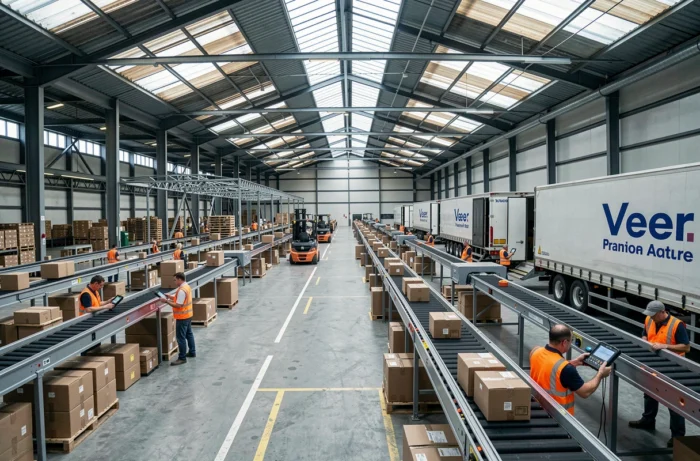
A transporter, historically, moves goods from point A to point B. This definition no longer corresponds to the reality of large French groups. Geodis, XPO Logistics, STEF, or Ceva Logistics now offer a complete supply chain management: warehousing, order preparation, returns management, IT-driven inventory control.
Why this shift? Because clients (manufacturers, distributors, e-commerce merchants) seek a single point of contact capable of managing the entire logistics chain. A transporter that only offers transport finds itself in direct price competition. One that integrates high-value-added logistics services retains its clients and improves its margins.
- STEF combines refrigerated transport and management of temperature-controlled warehouses, making it a difficult-to-replace player for the agri-food sector
- Geodis develops tailored contractual logistics solutions for industry and e-commerce
- Groups like Mousset specialize in transporting bulky or sensitive products, combining industry expertise and dedicated logistics
This evolution towards integrated logistics explains why the ranking of transporters also reads as a ranking of logistics players. The pure transport revenue tells only part of the story.
The French road transport sector is undergoing a period of rapid transformation. Between consolidation through acquisitions, regulatory pressure on decarbonization, and a shift towards global logistics, the companies that will top the rankings tomorrow may not necessarily be those of today. The ability to recruit drivers and electrify fleets will distinguish leaders from followers in the coming years.