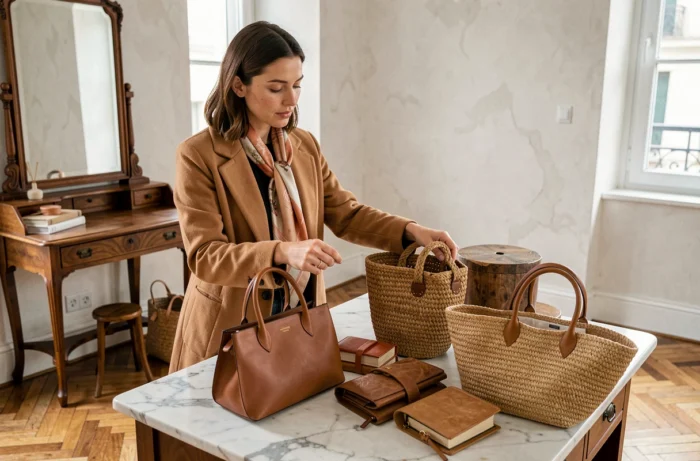
A fashion accessory refers to any item added to an outfit to alter its visual perception: bag, belt, jewelry, scarf, hat. Each piece affects the perceived proportions of the silhouette, the distribution of volumes, and the color palette of a look. The trendy accessories of this season reflect a concrete turning point in European textile production, with natural materials gaining ground and regulations pushing brands to rethink their inventories.
European Regulation and Access to Seasonal Accessories
Since July 19, 2026, large companies in the European Union are no longer allowed to destroy unsold new clothing, shoes, and accessories. This ban, documented by the European Circular Economy Platform, requires them to prioritize selling, donating, repairing, or recycling, with proof required.
The direct effect on the accessories market is tangible. Discount outlets and second-hand platforms are seeing an influx of seasonal pieces that would have been destroyed before. Trendy accessories are becoming available at reduced prices through these channels, without waiting for traditional sales.
To spot pieces that match a specific style among this expanded offering, it becomes useful to consult the accessories page of Boulevard Mode to compare the categories available this season.
Another directive in preparation, the extended producer responsibility (EPR) for textiles, is set to be implemented by 2028 across the EU. Brands will need to finance the collection and end-of-life processing of their products. This currently promotes accessories made from recyclable or biodegradable materials, such as linen, braided cotton, or raffia.
Natural Materials and Color Palette: The Foundation of Style This Season
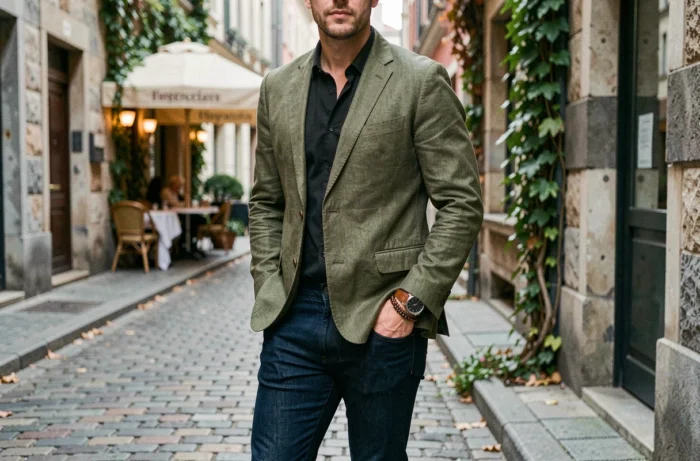
Raffia, linen, and braided cotton dominate the spring-summer 2026 accessory collections. These fibers are not chosen by chance: they meet the regulatory constraints mentioned above while offering a distinct, matte, and slightly irregular texture that contrasts with the smooth surfaces of synthetic clothing.
Why Natural Materials Change the Perception of an Outfit
A raffia bag or a braided cotton hat introduces what stylists call a texture contrast. Placed next to a fluid fabric (viscose dress, silk blouse), the raw fiber accessory draws the eye with its relative roughness. This play of surfaces adds depth to a monochrome look without adding extra color.
Texture contrast replaces color contrast as the main stylistic lever this season. A total beige or off-white look gains dimension with a single accessory made from raw natural material.
Colors to Favor According to the Desired Effect
The palettes observed in this season’s collections oscillate between sunny tones (saffron yellow, coral, terracotta) and bright neutrals (ecru, sand, optical white). The choice depends on the visual effect sought:
- Warm and saturated tones (coral, terracotta) draw the eye to the area where the accessory is worn, highlighting the face with a scarf or the hips with a colorful belt.
- Bright neutrals (ecru, sand) unify the silhouette and visually elongate the line, particularly effective on a bag worn crossbody or a wide-brimmed hat.
- Cool colors (lavender blue, sage green), present in discreet touches this season, function as accent points on jewelry or small leather goods.
Belt and Bag: Two Accessories That Alter the Silhouette
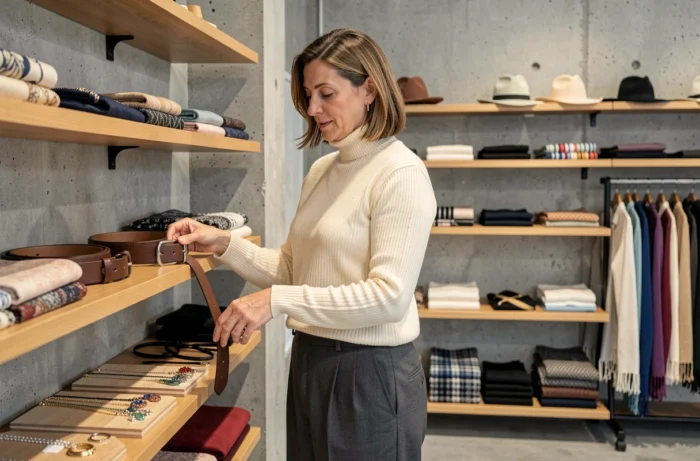
Not all accessories play the same role in the perception of proportions. The belt and the bag are the two pieces that most directly alter the reading of the silhouette, as they create horizontal or diagonal lines on the body.
The Belt as a Proportion Tool
Worn at the natural waist, a belt marks the separation between the bust and the hips. The wider the belt, the more it visually shortens the bust. On a fluid dress or high-waisted pants, a thin belt (two to three centimeters) elongates the torso. A wide belt (five centimeters and more) provides more structure but is better suited for silhouettes with a long bust.
Models in braided leather or cotton canvas, consistent with the trend for natural materials, replace bulky metal buckles this season in favor of discreet fasteners or simple knots.
The Bag Worn Crossbody or in Hand: Two Distinct Effects
A bag worn crossbody creates a diagonal line across the torso that draws the eye to the opposite hip. This creates a sense of movement and slightly deconstructs an overly symmetrical look. A bag held in hand or tucked under the elbow, on the other hand, adds a horizontal line at the waist or hips.
The choice of how to carry the bag alters both the style and the model itself. The same wicker tote will give a casual result when worn on the shoulder and a more structured look when held in hand.
Jewelry and Scarf: Visual Accents Near the Face
Jewelry and scarves share a common function: they direct the gaze towards the upper body and the face. Their placement and volume determine the intensity of this effect.
A choker visually broadens the shoulder line. Dangle earrings elongate the neck. A scarf tied in a triangle above the chest creates a central focal point. These effects are cumulative, but limiting accessories to two areas of the body avoids visual overload.
- Face/Neck area: choose between statement earrings OR scarf, rarely both simultaneously.
- Wrist/Hands area: bracelets or rings, consistent with the metal tone (gold, silver, brass) of the other jewelry worn.
- Waist/Hips area: belt or structured bag, not both competing directly on the same horizontal line.
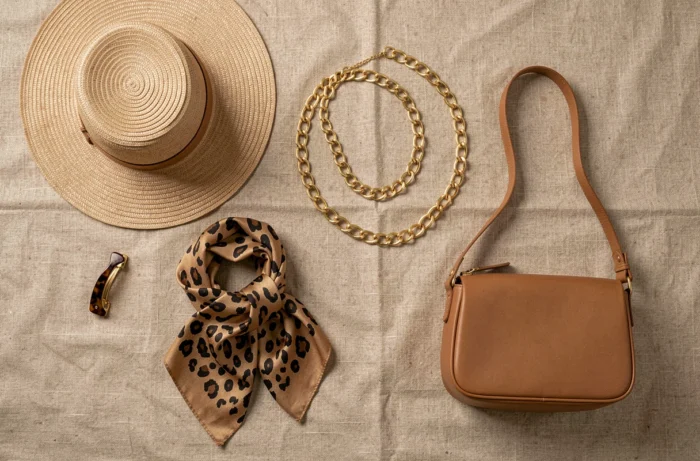
The lightweight fiber scarf (silk, modal, fine cotton) remains the most versatile piece of the season. Tied in hair, around the wrist, or on the handle of a bag, it redistributes color with each knot without requiring a new purchase.
The 2026 season stands out due to a regulatory framework that concretely transforms the available accessory offerings. Betting on pieces made from natural and recyclable materials is both following the current aesthetic trend and anticipating a European textile market undergoing significant structural change.